
Going from $1k to $10k a month is a tenfold increase, and the way to get there is not to publish ten times as much.
The sites that make this jump are usually the ones whose owners know which pages pay, why they pay, and how to repeat that on purpose.
This article lays out how to scale an affiliate website with a system built from your own numbers.
You will find what already earns, copy it, repair what almost works, add a second source of income, and run all of it on a weekly schedule you can keep.
What really changes between $1k and $10k a month
At $1k a month, most sites run on a few pages, one main traffic source and decisions made by feel. That works until it stops working, and then nobody can say why.
Affiliate income comes from four numbers multiplied together: visitors, the share of visitors who click an affiliate link, the share of those clicks that become sales, and the commission per sale. A gain in any one of them raises the total, and gains in several compound.
Here is a hypothetical.
You double your traffic, raise the click rate by half, and move to an offer that pays a third more per sale.
Two times 1.5 times 1.33 is about four, so the same site earns roughly four times as much without any single change looking dramatic.
That is why “do more of everything” stalls. Writing more posts only works on the first number, and only if the new posts are as good as the ones that already earn.
What changes at the higher level is the question you ask each week. Instead of “what should I write next?”, you ask “which of the four numbers is the weakest on my best pages, and what is the smallest change that improves it?”
Verdict: Keep the habit of tracking all four numbers for every page that earns. Drop the idea that a bigger publishing schedule is the plan.
Find the pages and traffic sources that already pay you
Start with a plain spreadsheet.
Pull the last 90 days of data from your affiliate dashboards, your analytics and Google Search Console, and put one row per page.
For each page, record:

- Sessions in the period
- Clicks on affiliate links
- Sales and commission earned
- The main traffic source (search, email, social, referral)
Sort the sheet by commission earned, not by traffic. Pages with a lot of visitors and no income feel important, but they are not what is paying you.
Look at the top five rows.
Check what they have in common: the type of page (review, comparison, how-to), the kind of reader (someone ready to buy, or someone still researching), and where the visitors came from.
Then do the same sort by traffic source.
If most of your commission comes from search and almost none from social posts, you now know where an extra hour is worth the most.
If you want help turning this sheet into a plan, the post on turning your affiliate data into a 90-day content plan with AI covers that next stage in detail.
One caution: 90 days is a minimum. A page that looks weak may be seasonal or still climbing in search, so check its trend before you judge it.
Verdict: Keep the earnings-sorted sheet and update it monthly. Drop any traffic number that has no commission attached to it from your decision making.
Turn your best earner into a template you can repeat
Once you know your top page, take it apart. The goal is a written description of why it works, so a new page can follow the same pattern.
Open the page and note down:
- The search intent it answers, and the exact phrase a reader would type
- The format and rough length
- The order of sections, and what the opening paragraph promises
- Where the affiliate links sit, and what the text around each one says
- What the page offers that a competitor’s page does not, such as a clear recommendation, a comparison or a worked example
- Which other pages on your site link to it
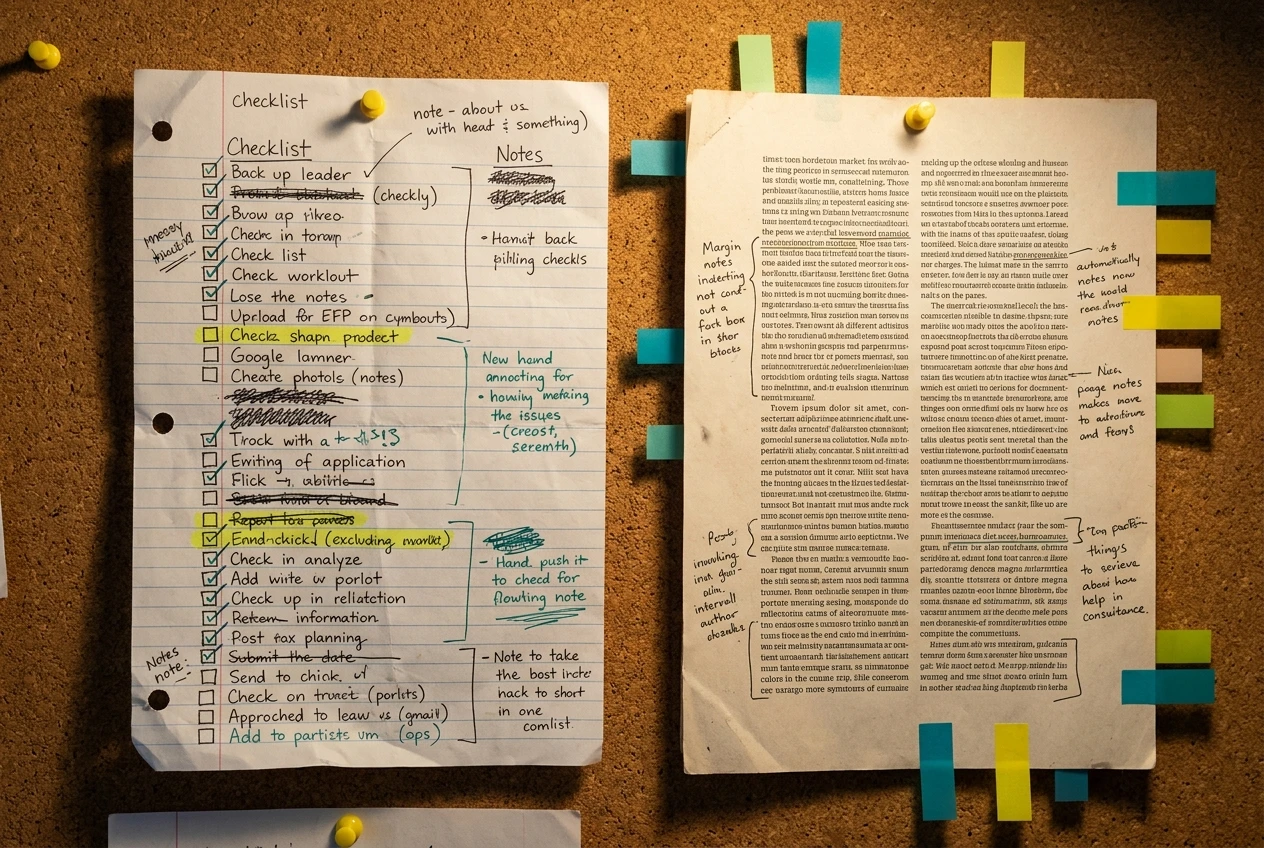
Put that into a one-page checklist. This is your template, and it should be specific enough that someone else could follow it.
Next, find new topics that fit it.
Keyword research tools help here: look for phrases with the same buying intent as your best earner but a different product or question.
If you are weighing paid tools, the comparison of SEMrush and Ahrefs for an affiliate site shows what each one gives you for the monthly fee.
A template carries one risk.
If every page follows it mechanically, they start to read alike, and AI drafting makes that worse. The article on AI mistakes that make affiliate sites look like everyone else’s is worth reading before you build pages from a pattern.
Keep the structure fixed and the content fresh.
The sections and link placement come from the template, but the product details, the comparisons and the recommendation should come from the product itself.
Verdict: Keep the checklist and use it for every new page in your best category. Drop topics that do not match the intent your top pages serve, however interesting they seem.
Fix the pages that almost convert before you publish more
Every site has pages that come close. They have visitors and they have some clicks, but the sales are thin.
Improving a page like this is cheaper than writing a new one, because the traffic is already there.
Use your sheet to sort these pages into two groups.
The first group has plenty of sessions and few affiliate clicks.
The problem is on the page: the links are hard to find, the recommendation is buried, or the content does not match what the visitor came for.
The second group has decent clicks and few sales.
The problem is after the click: the offer may not suit the reader, the destination page may be weak, or the product the reader wants may no longer be the one you recommend.

For the first group, try these changes, one at a time:
- Move the recommendation higher on the page
- Make the link text say what the reader gets
- Add a short summary near the top so a reader in a hurry sees your pick
- Cut sections that wander away from the original question
For the second group, check that the product and its price are still current, and that the page you send readers to makes sense for someone arriving from your article.
If you use your own landing pages, the review of AI landing page builders for affiliate pages explains what the tools change and what they leave alone.
Change one thing per page and leave it for a few weeks before you judge it. If you change five things at once, you will not know which one worked.
The article on using AI to find and fix the leaks in your affiliate funnel goes deeper on diagnosing exactly where readers drop off.
Verdict: Keep a short list of near-miss pages and fix one or two a week. Drop new publishing on weeks when a page with proven traffic has an obvious fault.
Add income that does not rest on a single traffic source
If one search ranking brings in most of your commission, a ranking change can cut your income in a week. Going from $1k to $10k means that no single page or source can do that to you.
Three kinds of diversification are worth considering.
The first is email. Visitors who join a list can be reached when you publish a new recommendation, without waiting for search to send them back.
The guide on building an email list from the affiliate site traffic you already have shows how to start from your current visitors.
The second is a second traffic channel.
Pick one that suits the way your readers search, such as video, Pinterest or a community, and give it a fixed amount of time each week.
Spreading yourself across four channels at once tends to produce four thin presences.
The third is the offer itself.
Look at what you promote and ask whether any of it pays recurring commissions, or whether a related product would suit the same reader at a later point.
A reader who bought one thing from your recommendation often needs another.
If you promote Wealthy Affiliate, this is also where a second layer of content fits.
Readers who are learning to build their own site have different questions from readers choosing a product, and a separate set of pages for them reaches people your product reviews do not.
Start with only one addition. A second channel that you can keep up for six months is worth more than three that you abandon after six weeks.
Verdict: Keep search as your base and add email first, since it uses traffic you already have. Drop any new channel that you cannot maintain on a regular schedule.
Build a weekly rhythm you can actually keep up
A system is only useful if it runs every week.
The routine below takes about the same time each week, and you can adjust the hours to your own schedule.

- Day one, review (30 to 45 minutes): Update your sheet. Note which pages gained or lost clicks and sales, and pick the one page to fix this week.
- Day two and three, build (the largest block of your time): Write one new page from your template, or most of one.
- Day four, repair: Make the planned change to the near-miss page. Write down what you changed and the date.
- Day five, distribute: Send an email to your list, post in your second channel, and add internal links from older pages to the new one.
Keep a plain log with the date, the page, the change and the number you expect to move. In a month you will have a record of what worked on your site, which is more useful than any general advice.
Once a month, spend an hour on a bigger review. Check whether the top five pages have changed, whether the template still matches your best earner, and whether the added channel is producing any commission.
Set the schedule at a level you can hit in your worst week, not your best one. A routine that fits a busy week gets done every week, and consistency is what lets the numbers compound.
Verdict: Keep the weekly review and the change log, because they are what make the routine a system. Drop any task in the week that never leads to a decision.
Decide what to keep, what to drop and what to hand off
After a few months of running this routine, your log will show where your time pays and where it does not. Use it to make three decisions.
Keep the things your data supports: the pages that earn, the template built from them, the weekly review, and the one extra channel if it produces sales.
Also keep the parts that depend on your judgment, such as which product you recommend and why.
A reader can tell when a recommendation comes from someone who looked closely at the product.
Drop pages that have been updated and still get no traffic or clicks. Drop channels that cost hours and produce no commission. Drop products that earn little and draw complaints or returns.
Pruning is not a loss. It frees the weekly hours for the pages and channels that pay.
Hand off the repeatable work that does not need your opinion: pulling data into the sheet, drafting outlines from the template, formatting posts, creating images, and scheduling emails.
AI tools can do much of this, and the guide on which parts of your affiliate business to automate with AI and which to keep by hand draws that line in more detail.
Handing off works best one task at a time.
Pick the task that takes the most hours and requires the least judgment, hand it off, and check the output for a few weeks before you add another.
Verdict: Keep what the log proves and what only you can judge. Drop what has had a fair test and failed. Hand off the repeatable tasks one at a time, starting with the one that eats the most hours.
If you want the Learn tab, live classes, hosting and a community of other affiliates in one place while you build this system, you can start with Wealthy Affiliate through my referral link.
P/S – If you join Wealthy Affiliate through my link, I might get a small commission but withot an extra cost to you!!!!!!!