
Affiliate marketing has become a popular way for people to earn income online, but the world of affiliate marketing is full of unique terms that can be a bit overwhelming if you are just getting started.
Knowing what these terms mean is really important if you want to understand training, work with affiliate programs, and make your first commission.
I put together this guide to break down the most common affiliate marketing terms, so you feel comfortable joining the affiliate scene.
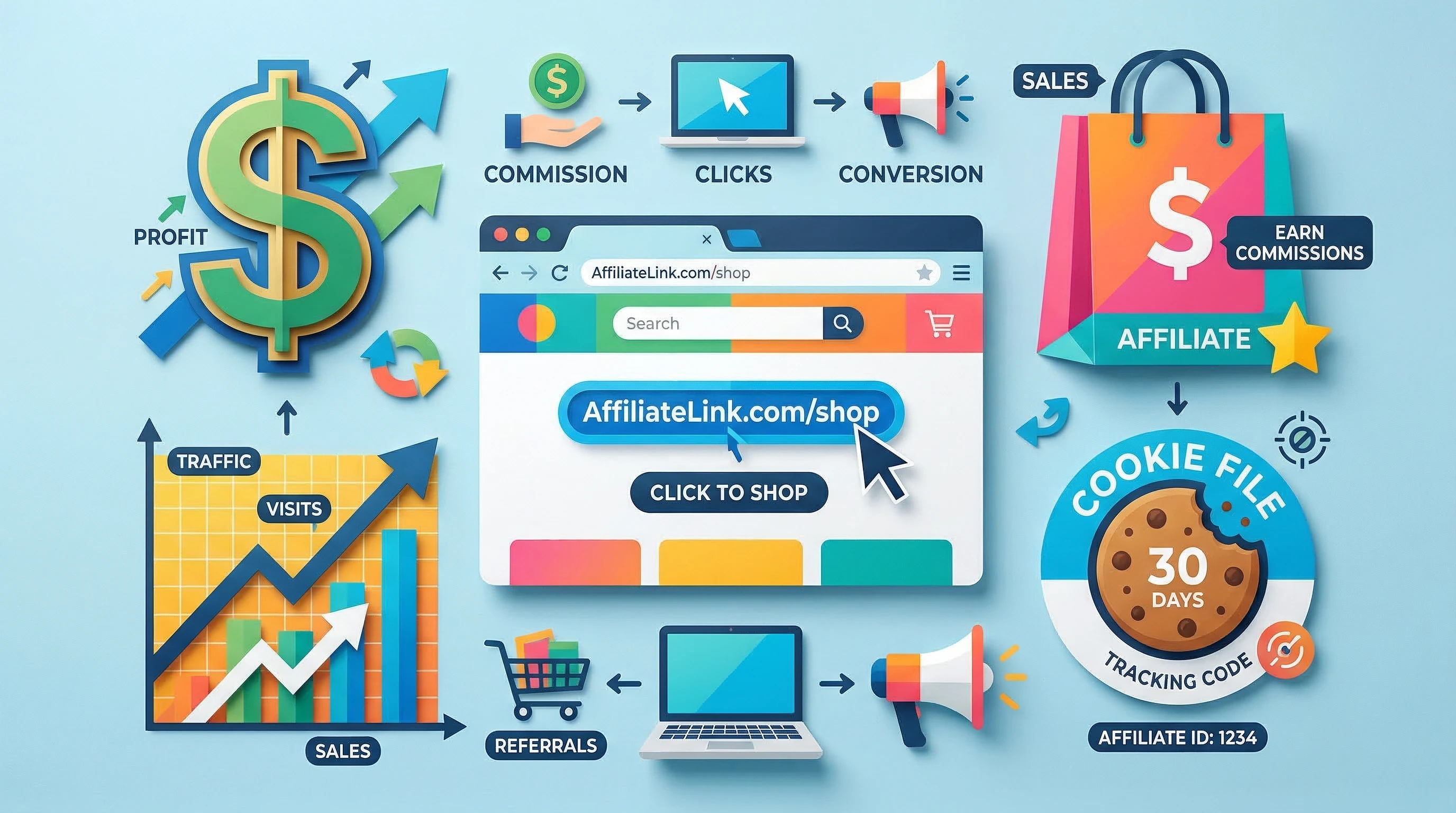
What Are Affiliate Marketing Terms?
Affiliate marketing terms are the common words and phrases used to explain how this business actually works.
You will see terms like “affiliate link,” “conversion rate,” “commissions,” and “cookies” in guides, courses, and affiliate program dashboards.
These terms help people talk about things like how sales are tracked, how traffic finds your links, and how you get paid for referring products or services.
If you understand these words, following tutorials, reading your affiliate stats, or joining new programs is so much easier.
It is almost like learning a new language that helps you steer through the affiliate marketing world smoothly.
Plus, you will find that a clear grasp of these definitions speeds up your progress, minimizes confusion, and lets you spot opportunities you might otherwise overlook.
As you read blog posts, watch tutorials, or even build your first campaign, having a solid foundation in this vocabulary helps you manage your workflow more efficiently.
Why Affiliate Marketing Terms Matter for Beginners
Affiliate marketing guides, videos, and program instructions often jump straight into strategies and tools without explaining industry-specific terms, which can be pretty confusing if you are starting out.
By learning what these terms mean, you will save lots of time (and maybe even money) as you build your online business.
Knowing these words also helps you ask questions in forums, understand affiliate dashboards, and pick the right strategy for your goals.
If you are part of a mastermind group or an online community, you will find the learning curve much easier to manage when you can speak the language the rest of the group is already using.
I remember feeling like I was reading in code when I first checked out my affiliate dashboard years ago.
Figuring out words like “cookie duration” or “CTR” made tracking my progress much more comfortable.
Learning affiliate terms is not just for passing a quiz. It is practical and will help you move forward quicker and with fewer mistakes.
Plus, you will be more effective at collaborating with partners or negotiating with affiliate managers when you share a common language.
How Knowing Affiliate Terms Helps Beginners Succeed
- Understanding how links, tracking, and commissions work: This means you can quickly set up your campaigns the right way.
- Communicating with affiliate networks and other marketers: When you know the lingo, it is easier to get the support or answers you need.
- Following training and tutorials accurately: Instructions make more sense, so you do not miss out on important steps.
- Spotting potential mistakes faster: Concepts like conversion rate, cookies, or payouts let you identify issues in your funnel or links right away.
- Making faster decisions: You will be able to judge new opportunities, compare offers, and set up campaigns with less hesitation, thanks to your clear understanding of these essential terms.
Understanding this language is not about sounding smart. It is about advancing your business with less stress and more confidence.
Over time, this foundation can also prepare you for scaling up—like managing paid ads, optimizing content funnels, or testing product launches with ease.
Core Affiliate Marketing Terms Explained
A good starting point is the basics you will see everywhere in affiliate marketing conversations and articles.
Here are the key terms you will want to know out of the gate:
- Affiliate: The person (like you or me) who promotes someone else’s products or services and gets paid if a sale, sign-up, or other action happens through their special link.
- Merchant (Advertiser): The business, company, or individual that owns the product or service. Affiliates help the merchant by sending them new customers.
- Affiliate Network: A platform that connects merchants to affiliates. The network tracks performance, manages commissions, and often offers a big range of offers to promote (think ShareASale, CJ, or Rakuten).
- Affiliate Program: The actual setup offered by the merchant that allows affiliates to join and promote their products. Sometimes this is independent, and sometimes it is managed by a network.
- Publisher: Another word for an affiliate. Some networks and merchants use this term to refer to the person promoting their offer. Knowing both terms is handy when you encounter different program dashboards.
Key Affiliate Link And Tracking Terms
Understanding how affiliate links, tracking, and cookies work will help you monitor your commissions accurately and avoid confusion.
- Affiliate Link: A special URL assigned to you by a merchant or network, which tracks whenever someone clicks your link and takes a desired action (like buying a product).
- Tracking ID: A unique code (sometimes added to your links) that helps identify and monitor where your sales or leads are coming from. Really useful if you promote on multiple channels.
- Cookies: Small data files stored in a visitor’s browser when they click on your affiliate link. These help keep track of who referred the customer, even if they come back to buy later.
- Cookie Duration: How long after the initial click that you will still get credit for the customer’s action. For example, a 30-day cookie means any sales within 30 days will still earn you a commission.
- Attribution Model: This determines which affiliate gets credit for a sale if multiple affiliates referred the same customer. You might see terms like “last-click attribution” (the last referred affiliate gets credit) or “first-click attribution” (the first referred affiliate gets credit).

Common Commission And Payment Terms
Getting paid is huge.
That is why these are some of the first terms I wanted to learn. Here is what you will see about commissions and payout methods:
- Commission: The payment you earn for each sale, lead, or other conversion made through your affiliate link. It can be a flat rate or percentage.
- PayPerSale (PPS): You earn money when your referral leads to a purchase.
- PayPerClick (PPC): You get paid each time someone clicks your affiliate link, regardless of whether they buy anything (less common, but it exists).
- PayPerLead (PPL): You earn when someone completes a specific action, like filling out a form or signing up for a free trial; payment happens even if there is no sale.
- Payout Threshold: The minimum amount you need to earn before the program pays out your commissions (like $25, $50, or more).
- Payment Methods: How you get paid. Typically via bank transfer, PayPal, check, or sometimes store credit.
- Recurring Commissions: In some programs, you will keep getting paid as long as the customer stays subscribed or continues to pay for a service you referred them to. This can add up to significant passive income over time.
Understanding Traffic And Performance Metrics
Learning these words helps you analyze your website or campaign stats, which is super useful for deciding what is working and what needs tweaking.
By using analytics, you can fine-tune your campaigns for better performance, leading to more consistent earnings.
- Organic Traffic: Visitors who find your site or content through search engines without paid ads.
- Paid Traffic: Visitors arriving via paid ads, like PPC campaigns or display ads.
- Conversion Rate: The percentage of visitors who complete your desired action (buy, subscribe, or fill out a form via your affiliate link). For example, a 2% conversion rate means 2 out of every 100 visitors convert.
- ClickThrough Rate (CTR): The percentage of people who see your link or ad and actually click on it. This metric is super useful for testing headlines, banners, or email subject lines.
- Impressions: The number of times your affiliate link or ad is shown (regardless of whether it’s clicked).
- Earnings Per Click (EPC): The average amount you earn every time someone clicks your affiliate link. This number helps you compare program performance at a glance and decide where to focus your efforts.
- Return on Investment (ROI): A calculation showing how much money you make back compared to what you spend on marketing or ads for a campaign. Positive ROI means you are making more than you are spending.
Common Content And Marketing Terms in Affiliate Marketing
- Niche: The focused topic or target audience your website or campaign is all about. For example, “fitness for beginners” or “budget travel gear.”
- SEO (Search Engine Optimization): Techniques you use to help your content rank higher on Google and other search engines so you get more organic traffic.
- Call to Action (CTA): A button, link, or phrase that prompts your reader to do something, such as “Sign Up Now” or “Buy This Product.” Strong CTAs boost your conversions.
- Landing Page: A dedicated web-page designed to guide visitors toward one specific action, often optimized for sign-ups, sales, or collecting leads.
- Blog Post: An article you publish on your site, often used for product reviews or howto guides that include your affiliate links.
- Content Upgrade: A specific type of lead magnet, often tied to a blog post, that offers readers an extra bonus for subscribing (such as a checklist or template). These can significantly increase your email list signups.
Affiliate Strategy Terms for Ramping Up Results
- Funnel: The series of steps your audience moves through, from first learning about a product to finally making a purchase.
- Lead Magnet: A free offer (like a checklist, ebook, or minicourse) given away to encourage visitors to join your email list. These are really handy for building trust with your audience.
- Email List: A collection of email subscribers. Building a list lets you send updates or promote new offers, which boosts your earnings over time.

- Content Funnel: A mix of articles, emails, and posts designed to move visitors closer to buying or signing up through your affiliate links.
- Split Testing (A/B Testing): Comparing two versions of something (like landing pages) to see which gets better results, so you can improve your earnings.
- Tripwire Offer: A low-priced, high-value product offered right after someone signs up or enters your funnel. This helps warm up new leads for future, higher-ticket offers.
- Retargeting: A form of online advertising that shows ads to people who have already visited your site or interacted with your links before. Retargeting can catch users who did not convert the first time around and bring them back.
How Understanding Affiliate Marketing Terms Boosts Your Growth
Knowing these terms makes everything from training videos to affiliate manager feedback much clearer.
With this language under your belt, you waste less time looking up meanings, make smarter strategy choices, and avoid beginner pitfalls.
Whether you are writing blog posts, setting up email campaigns, or analyzing results, the whole process becomes less stressful.
I have seen first-hand how these words become second nature once you have used them for a bit, and each new program you join will feel less like swimming upstream.
By eliminating confusion early on, you can focus on developing high-converting campaigns and building lasting income streams.
On top of that, your professional network grows faster when you are able to communicate effectively.
This opens doors to partnerships, influencer collaborations, and higher tier offers or private programs that require proven know-how.
Over time, your confidence increases as you become more familiar with affiliate terminology, making it easier to branch out and take on more advanced projects.
Helpful Tools And Training for Learning Affiliate Marketing Terms
Getting your head around affiliate marketing is much easier with reliable training and community support.
There are a few really useful options that walk beginners through the terms and strategies step by step.
I have found platforms like Wealthy Affiliate offer hands-on learning, vibrant forums for questions, and even keyword research tools—all in one place.
These platforms often have built-in glossaries, training modules that define each concept, and expert coaches who answer your questions in plain English.
Look out for features like:
- Interactive training with real examples
- Website builders with step-by-step setup
- Affiliate term glossaries and live support
- Active communities where you can get advice and feedback quickly
- Template libraries, email swipes, and up-to-date SEO tips that further support your learning
Tapping into these resources makes picking up the jargon and applying the strategies much faster and less confusing.
You can also track down podcasts, YouTube channels, and blogs dedicated to affiliate marketing for extra support and up-to-date industry changes.

Biggest Mistakes Beginners Make with Affiliate Marketing Terms
- Jumping into strategies or signing up for programs before understanding what terms like “cookie duration” or “PPL” really mean
- Ignoring the meaning of traffic sources (organic vs paid) and putting all their effort into one channel
- Not learning about SEO or conversion tracking, so they can’t tell what’s working
- Promoting too many products at once and losing focus on their main niche or audience
- Chasing offers with high commissions but not checking how (or if) they actually convert well for their audience
- Not asking for clarification in forums or program support chats when something is unclear. This often leads to missed payouts or tracking issues that could have been avoided with a quick question.
- Overlooking payout thresholds or payment method requirements, which can delay earnings or create unnecessary frustration for new affiliate marketers
Paying a bit of attention to these basics helps you move ahead with fewer headaches and better results.
It is always worth spending an extra hour or two making sure you understand core terms before building out new campaigns or investing in paid traffic.
FAQ: Affiliate Marketing Key Terms
People new to affiliate marketing often have a bunch of questions. Here are a few quick answers:
What are the most important affiliate marketing terms?
Terms like affiliate, merchant, affiliate link, commission, cookie duration, conversion rate, and CTA are really important to know first. Adding definitions for EPC (Earnings Per Click), SEO, and funnel will help even more as you get deeper into the process.
Do beginners need to understand affiliate marketing terminology?
Knowing industry terms makes learning, setting up, and troubleshooting your affiliate campaigns much easier. You’ll avoid common mistakes and communicate better with networks and partners.
What’s the difference between an affiliate program and an affiliate network?
An affiliate program is set up by a single merchant; an affiliate network connects you with multiple merchants and manages offers, tracking, and payments on their behalf.
How do affiliate links track commissions?
Affiliate links include a unique identifier, tracked through cookies. When someone clicks your link and makes a purchase (within the cookie period), the sale is credited to you and you earn a commission.
Can I succeed without mastering every term?
You don’t need to memorize every single term right away. However, getting a handle on the essentials will help you follow along with courses, implement new strategies, and get better results overall. You’ll pick up more terms as you go.
Affiliate Marketing Success Starts with the Right Vocabulary
Learning these affiliate marketing terms makes the business way less intimidating.
When you know the language, picking up new strategies, asking for help, and reading stats all feel much more manageable.
Whether you are just starting or brushing up, keeping these terms handy is super useful.
Structured learning platforms, helpful communities, and dedicated training can help you grow faster and build real confidence as an affiliate marketer.
The more you take an active role in learning, the quicker you will see progress and results from your affiliate marketing efforts.
If you’re serious about getting started with affiliate marketing, the fastest way to avoid confusion and costly mistakes is to follow a proven system instead of figuring everything out alone.
👉 You can start learning affiliate marketing step by step here (free to join)
It walks you through everything—from choosing a niche and building your website to getting traffic and earning your first commissions.
You don’t need to be an expert—you just need the right guidance and consistency.
Good luck as you set off on your affiliate marketing adventure!
Here’s a little transparency: Our website contains affiliate links. This means if you click and make a purchase, we may receive a small commission. Don’t worry, there’s no extra cost to you. It’s a simple way you can support our mission to bring you quality content.”